Persistent pain, muscle tension and stress, and why relief doesn’t always hold
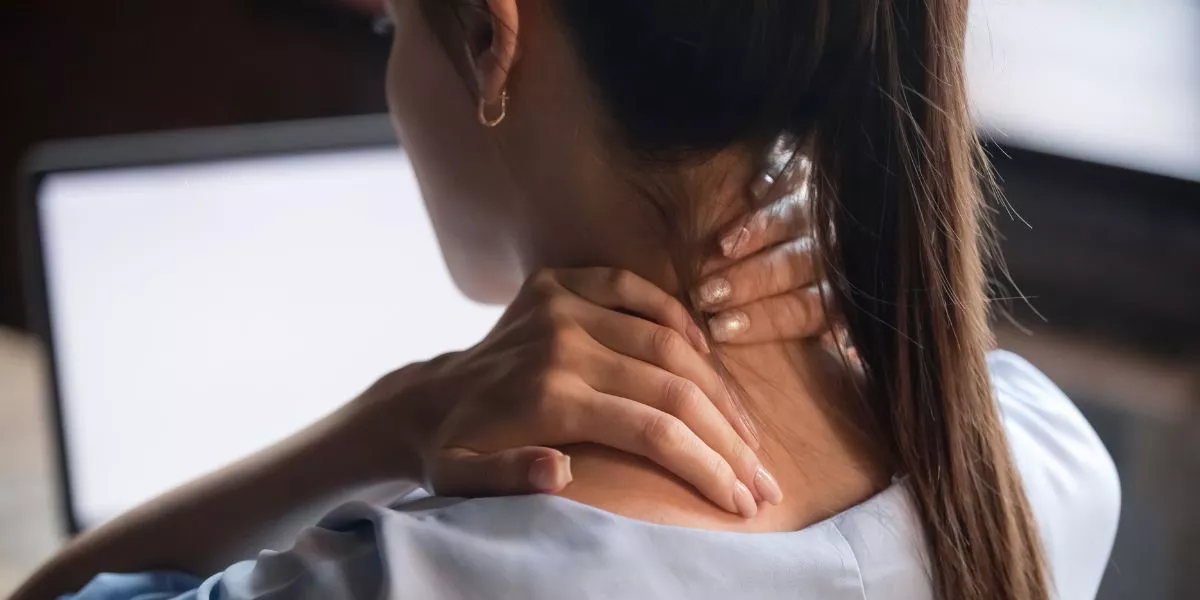
You wake up with neck pain. Maybe you slept in a strange position. It eases over a few days, then returns after a long afternoon at your desk. Or your back flares when you bend over to pick something up, even though you’ve made that same movement a thousand times.
Perhaps it’s a familiar headache that keeps interrupting your day. Sometimes treatment helps. You feel better and think you’ve finally turned a corner. Then something relatively minor sets it off again. You’re left thinking, “I hardly did anything!”
And sometimes the location changes. Your shoulder pain eases, but now your neck is tight. One part settles; another starts complaining.
When pain persists or keeps returning like this, the latest trigger may be only part of the picture.
What might be keeping it going?
An injury may still need care. Repeated physical demands, an irritated joint or nerve, or an underlying condition may be contributing. New, changing, or unexplained pain deserves appropriate assessment.
Alongside that, we can ask about the conditions in which your body is trying to recover. How are you sleeping? Do you get a chance to come down between demands? Are you carrying tension even when you have the opportunity to rest? Are you moving too much, not enough, or in ways that put unnecessary strain on your body?
If your neck has been tight through several demanding days, an awkward pillow may get all the blame for the next flare. The pillow may indeed have played a part. Looking at the preceding days gives us a fuller picture of what your neck was already dealing with.
Understanding your particular combination helps us choose sensible places to begin.

When stress, muscle tension and pain reinforce each other
Think about what happens during a difficult conversation. Your jaw tightens. Your shoulders rise. Your breath shifts. Or you’re concentrating at your computer, and suddenly realize you’ve been gripping the mouse as though it might escape.
Posture, physical effort, mental effort, and emotional strain can all meet in the same muscles.
Stress can add another layer of bracing to the effort of holding a posture or doing a task. “Fight or flight” is familiar language for that activation. You may feel anxious or wound up, or mostly notice the tight neck, shallow breathing, and difficulty getting comfortable. Staying wound up can also make restful sleep harder to find, which can make pain harder to bear.
When one demand follows another, that bracing can become easy to miss. A general posture of tension, vigilance, or activation can start to feel ordinary. I explore how modern life can keep us preparing for the next thing in Tigers, To-Do Lists, and Traffic Troubles.
Pain itself can add to the tension. You worry about setting it off, tense and guard around the sore or injured area. That guarding can make movement feel stiff and difficult. As pain persists, you may become more worried or frustrated, adding to the strain. Stress can contribute even when there’s a clear injury or diagnosis; its role varies from person to person.
Finding a workable rhythm
Movement matters, and so does the type, amount, and timing. Doing more than you currently tolerate can provoke a flare. Prolonged inactivity can leave you feeling stiff and, over time, reduce your sense of strength and ability to manage everyday activity.
If you’re working at a desk, reading, or absorbed in a task, take brief breaks from holding the same position. Stand up, take a short walk, or gently stretch and move in a way that feels comfortable. There’s no single perfect posture to maintain all day. A comfortable setup and regular changes of position can help.
Rest has a place too. Breaking demanding tasks into smaller portions, with recovery breaks, may help you avoid doing everything on a good day and spending the next few days recovering. Aim for a rhythm that suits your condition and current capacity, adjusting it as things change.
How acupuncture can help with recurring pain
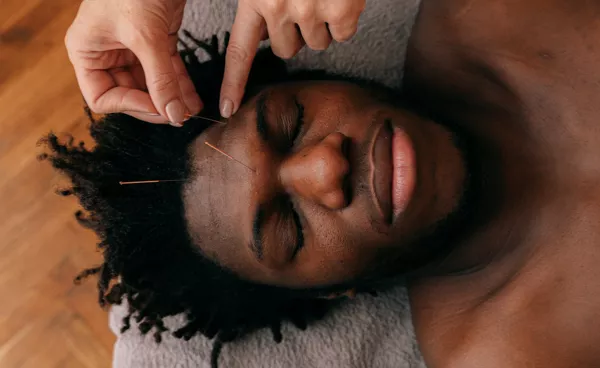
In my practice, I use acupuncture to help with the current pain and, where relevant, the persistent tension, compensating patterns, and difficulty settling that may be contributing to recurrence.
Research supports acupuncture for several kinds of chronic pain, including back and neck pain, shoulder pain, and headaches. I also work with both acute flare-ups of back or neck pain, and those moments wherever pain shows up. Studies suggest acupuncture can influence pain processing and nervous-system activity involved in stress and recovery.
As pain and persistent guarding ease, it may become easier to move, rest, and sleep. Those changes can support recovery and help interrupt the cycle of pain and tension.
I may use points near the painful area or farther away. Your nervous system carries and processes signals from across the body, and Chinese medicine also describes connections through meridians, or channels, which help guide point selection. That’s why a headache treatment, for example, may include points on your foot. It’s also why I may ask about your sleep, even if you came in because your shoulder hurts.
We follow what happens between appointments: does movement become easier? Does relief last longer? Are flares less frequent, or easier to recover from? Appropriate medical care, rehabilitation, and changes to physical demands may also be part of the plan.
A moment to notice what your body is doing
Here’s a small practice to try when something stressful catches your attention. It may be an email, a worry, or a conversation you’re still replaying.
- Bring your attention into your body. Where are you tightening, gripping, or bracing? Check your jaw, shoulders, hands, or belly.
- Take an easy breath. Give yourself a moment to feel what’s happening.
- Readjust your posture and see whether the tight area can soften a little. Loosen your grip, let your shoulders settle, or find a more comfortable position.
- If it feels comfortable, gently move or shake out your hands and arms. Stay within an easy range.
- Notice again. Has anything changed, even slightly?

With practice, you may begin to recognize the connection: “When that happened, I tightened here. Now I can feel what changes when I soften or move.”
You don’t have to make yourself perfectly relaxed. Even noticing the connection is useful. Practise during ordinary moments, including when your pain is quieter, so you can get to know your own patterns.
When pain is part of a bigger picture
If pain and tension travel with poor sleep, digestive trouble, exhaustion, or feeling constantly on alert, you may recognize more of the picture in my article Signs of a Dysregulated Nervous System.
You don’t need to arrive to your appointment knowing whether stress is involved. We can explore what’s happening, what has already been tried, and what you most want to change.
Next steps
At an initial appointment, we look at what sets off your pain, what has helped, and what else may be contributing. From there, we develop a treatment plan that makes sense for you.
- Book an initial acupuncture appointment with me at Acacia Health in Victoria.
- Arrange a free phone consultation through our front desk to discuss whether this approach fits.
We can start with what hurts and follow the connections from there.
Reuven Freesman is a Doctor of Traditional Chinese Medicine and Registered Acupuncturist at Acacia Health in Victoria, with over 20 years of clinical and teaching experience and a focus on nervous system regulation, stress, and complex pain. You can read more about his approach on his bio page.
-
Raja SN, Carr DB, Cohen M, et al. The revised International Association for the Study of Pain definition of pain: concepts, challenges, and compromises. Pain. 2020;161(9):1976-1982. doi:10.1097/j.pain.0000000000001939
https://pubmed.ncbi.nlm.nih.gov/32694387/
https://pmc.ncbi.nlm.nih.gov/articles/PMC7680716/ -
Haack M, Simpson N, Sethna N, et al. Sleep deficiency and chronic pain: potential underlying mechanisms and clinical implications. Neuropsychopharmacology. 2020;45(1):205-216.
https://pubmed.ncbi.nlm.nih.gov/31207606/
https://pmc.ncbi.nlm.nih.gov/articles/PMC6879497/ -
Vickers AJ, Vertosick EA, Lewith G, et al. Acupuncture for chronic pain: update of an individual patient data meta-analysis. J Pain. 2018;19(5):455-474.
https://pubmed.ncbi.nlm.nih.gov/29198932/ -
National Center for Complementary and Integrative Health. Acupuncture: effectiveness and safety.
https://nccih.nih.gov/health/acupuncture - Hamvas S, Hegyi P, Kiss S, et al. Acupuncture increases parasympathetic tone, modulating HRV: systematic review and meta-analysis. Complement Ther Med. 2023;72:102905. doi:10.1016/j.ctim.2022.102905