
No two spinal cord injuries — or recoveries — are ever the same. Some individuals regain function quickly. Others experience slower, less predictable progress. And for many, the biggest question remains unresolved long after the injury itself:
How much will I heal?
While much of the spotlight in spinal cord injury (SCI) research has been on advanced medical technologies such as spinal implants and stem cell treatments, another body of research is quietly growing — one that looks at how acupuncture can support neurological healing when used alongside conventional care.
In this article, we’ll first review how spinal cord injuries are medically classified. Then we’ll explore what happens inside the nervous system after injury, and how neuro-acupuncture may influence healing at a cellular and physiological level. Using current scientific research as our lens, we’ll look at how acupuncture may help create an environment that supports recovery and functional improvement.
How Are Spinal Cord Injuries Classified?
When someone sustains a spinal cord injury, a specialized neurological examination is performed using the American Spinal Injury Association (ASIA) Impairment Scale. This standardized scoring system helps clinicians determine how much motor and sensory function remains below the level of injury — and provides a general framework for predicting recovery patterns.
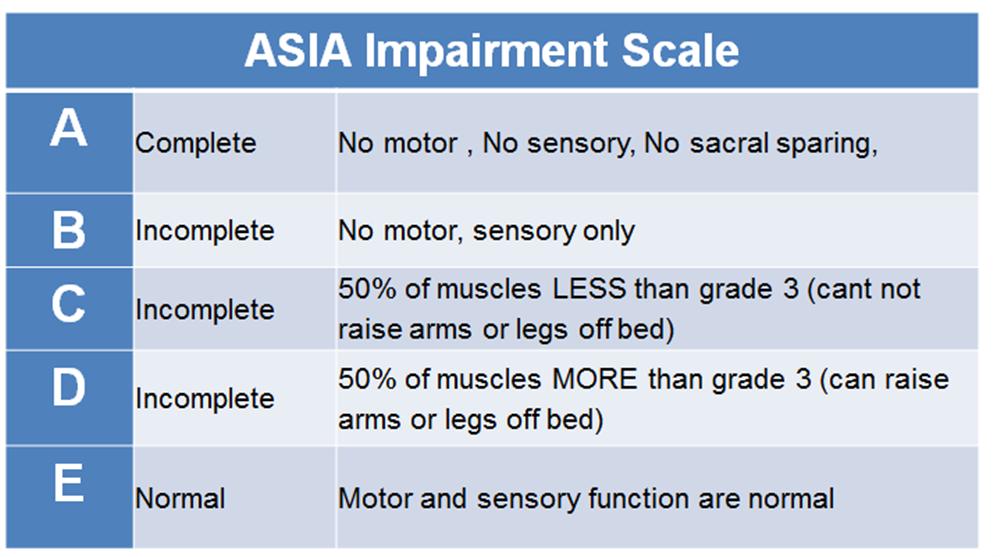
ASIA A
(Complete Injury)
- No motor or sensory function is preserved below the level of the injury. Despite this, recovery is still possible. Research shows that approximately 13% regain some motor function and 30% regain some sensory function over time, with outcomes influenced by injury level and mechanism.
ASIA B, C, D
(Incomplete Injury)
- Some degree of motor and/or sensory function remains below the injury site. Individuals in this category have significantly better recovery potential, with studies suggesting roughly a 40% likelihood of meaningful functional improvement.
ASIA E
(Normal Function)
- Motor and sensory functions are intact. This grade may be applied when a person initially experiences neurological symptoms but later recovers fully.
Because healing unfolds over time, ASIA scores are not static. Re-evaluation is important, as neurological function may change as inflammation resolves, circulation improves, and nervous system repair continues.
Although the most dramatic gains typically occur within the first 12–18 months, research confirms that neurological improvement can continue — sometimes subtly — for many years after injury.
The Role of Acupuncture in Spinal Cord Injury Recovery
The spinal cord is the central information highway of the body. Unlike skin or muscle, nervous tissue regenerates slowly — and only under the right conditions. After injury, this delicate environment becomes flooded with inflammatory chemicals, disrupted blood flow, and scar tissue formation, all of which interfere with healing.
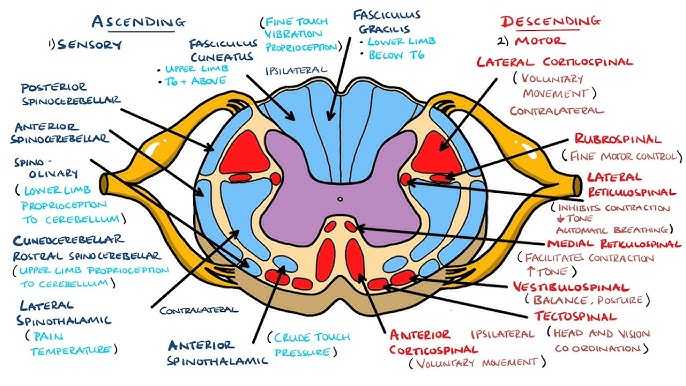
Neuro-acupuncture works by helping to influence the local biological environment — supporting circulation, regulating inflammation, and encouraging nervous system repair mechanisms to engage more effectively.
Three Ways Acupuncture May Support Spinal Cord Healing
1) Enhancing Microcirculation: Delivering Oxygen Where It’s Needed Most
One of the major challenging factors after a spinal cord injury is poor blood flow to the damaged area. The injury can damage blood vessels or cause them to rupture, leading to reduced oxygen and nutrient delivery, which are essential for tissue repair and regeneration. This lack of circulation also slows the removal of waste products and inflammatory molecules, which can worsen the injury over time.
As recommended by the American Association of Neurological Surgeons, doctors will use medication to artificially raise blood pressure for seven days after a spinal cord injury. This is done to improve circulation to the injured spinal cord, and has been shown to improve healing outcomes2. Acupuncture can also be used to help improve blood flow and studies have demonstrated its ability to increase microcirculation by decreasing capillary refill time in healthy adults18. This enhanced blood flow to injured tissues plays a key role in acupuncture’s healing effects.
Research shows acupuncture can:
- Improve capillary blood flow
- Reduce capillary refill time
- Stimulate vascular endothelial growth factor (VEGF), which promotes blood vessel formation
- Regulate endothelin receptors that control vascular constriction
Better microcirculation means healthier tissue, reduced cellular stress, and improved conditions for nerve healing.
2) Modulating Glial Scarring: Creating Space for Nerve Regrowth
The spinal cord contains not only neurons, the cells that transmit nerve impulses, but also glial cells — the “support staff” of the nervous system. These cells nourish neurons, regulate inflammation, clean up waste, and form insulating myelin around nerves.
There is a special type of glial cell called an astrocyte which play an important role after a spinal cord injury. The astrocytes form a protective barrier around the injured portion of the spinal cord, called a glial scar. This is a unique type of scar found only in the brain and spinal cord. While this scar initially helps stabilize the injury site, it eventually acts as a physical blockade that prevents new nerve fibers from growing through the damaged area.
Acupuncture has been shown in animal models to initially increase glial cell expression, which stops the spread of damage to neighbouring areas. Later, the effect of acupuncture shifts to reduce the expression of scar-forming astrocytes, thus limiting the secondary growth of fibrous scar tissue and making it more permissive for nerve regeneration3,4.
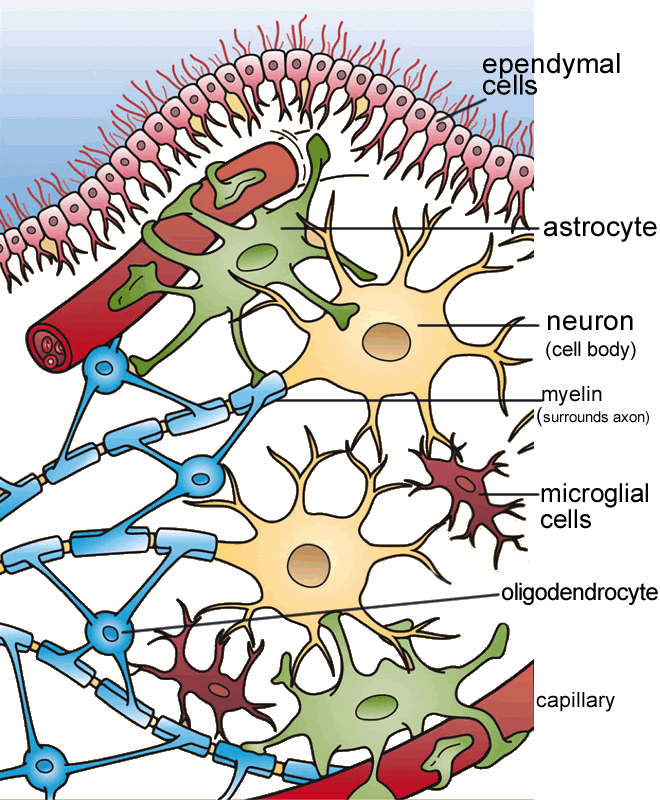
This is a remarkable finding that demonstrates acupuncture’s unique ability to enhance the body’s natural response and healing processes as they shift in subsequent stages of healing. By shifting the cellular environment in this way, acupuncture helps make room for regeneration while preserving the initial protective response.
3) Activating Stem Cells: Rebuilding the Nervous System from Within
Neural stem cells are the body’s internal repair system, capable of transforming into neurons and other types of cells, including the helper glial cells. However, after a spinal cord injury, inflammation and oxidative stress can suppress their activity.
Studies have shown that acupuncture with electrical stimulation promotes the release of mesenchymal stem cells, which can turn into functional neurons(12). This process is supported by acupuncture’s ability to regulate neurotrophic factors, proteins that support neuronal survival and growth.
By activating these stem cells and supporting proteins, acupuncture encourages neuroplasticity and the rebuilding of damaged neural pathways7.
A Holistic Approach to Healing
Animal research consistently demonstrates that acupuncture influences biological pathways involved in neural survival, circulation, inflammation, and regeneration. Human clinical trials — while smaller in scale — also show improvements in: 1,5,10,18
- Motor function
- Sensation
- Bladder control
- Neuropathic pain
Although larger studies are still needed, acupuncture is considered a low-risk, well-tolerated therapy that may enhance neurological recovery when used alongside rehabilitation, medical care, and physical therapy.
Healing from spinal cord injury is not one-dimensional. Acupuncture does not replace conventional care — but it may strengthen it by supporting the body’s own repair mechanisms.
Final Thoughts
A spinal cord injury affects far more than mobility — it alters identity, independence, and expectations. While no therapy offers guarantees, recovery rarely follows a straight line. Healing unfolds in layers.
Neuro-acupuncture offers a way to work directly with the nervous system — not just by symptom relief, but by supporting the underlying physiology involved in repair.
For those navigating life after SCI, this approach may offer another door toward progress — one that aligns ancient medical understanding with modern neuroscience.
If you’re looking to understand what the treatment experience is like, you can read more about neuro-acupuncture treatment options here.
Jennifer Midlane is a neuro-acupuncturist practicing at Acacia Health Clinic in Victoria, British Columbia. She focuses on providing care for those with neurological conditions by integrating the wisdom of Traditional Chinese Medicine with modern scientific research. For more information about her practice, visit www.neuroacupuncturevictoria.com. To book an appointment with Jennifer, click here.
- Cheng, P. T., Wong, M. K., & Chang, P. L. (1998). A therapeutic trial of acupuncture in neurogenic bladder of spinal cord injured patients: A preliminary report. Spinal Cord, 36(7), 476–480. https://doi.org/10.1038/sj.sc.3100689
- Hadley, M. N., Walters, B. C., Grabb, P. A., Oyesiku, N. M., Przybylski, G. J., Resnick, D. K., & Ryken, T. C. (2002). Blood pressure management after acute spinal cord injury. Neurosurgery, 50(3 Suppl), S58–S62. https://doi.org/10.1097/00006123-200203001-00012
- Hai, Z., Luxi, C., Zhao, P., Sisi, Z., Shiqi, W., Zhuowen, L., Minan, C., Shujun, L., & Yimin, Z. (2023). Efficacy of acupuncture on repair of glial scars in rats with traumatic brain injury. Journal of Traditional Chinese Medicine, 43(2), 329–336. https://doi.org/10.19852/j.cnki.jtcm.20221226.003
- Hong, E. S., Yao, H. H., Min, Y. J., Sun, J., Zhou, X., Zeng, X. B., & Yu, W. (2021). The mechanism of electroacupuncture for treating spinal cord injury rats by mediating Rho/Rho-associated kinase signaling pathway. Journal of Spinal Cord Medicine, 44(3), 364–374. https://doi.org/10.1080/10790268.2019.1665612
- Honjo, H., Naya, Y., Ukimura, O., Kojima, M., & Miki, T. (2000). Acupuncture on clinical symptoms and urodynamic measurements in spinal-cord-injured patients with detrusor hyperreflexia. Urologia Internationalis, 65(4), 190–195. https://doi.org/10.1159/000064874
- Hou, J., Xiang, Z., Yan, R., Zhao, M., Wu, Y., Zhong, J., Guo, L., Li, H., Wang, J., Wu, J., Sun, T., & Liu, H. (2016). Motor recovery at 6 months after admission is related to structural and functional reorganization of the spine and brain in patients with spinal cord injury. Human Brain Mapping, 37(6), 2195–2209. https://doi.org/10.1002/hbm.23163
- Jiang, K., Sun, Y., & Chen, X. (2022). Mechanism underlying acupuncture therapy in spinal cord injury: A narrative overview of preclinical studies. Frontiers in Pharmacology, 13, 875103. https://doi.org/10.3389/fphar.2022.875103
- Kirshblum, S., Snider, B., Eren, F., & Guest, J. (2021). Characterizing natural recovery after traumatic spinal cord injury. Journal of Neurotrauma, 38(9), 1267–1284. https://doi.org/10.1089/neu.2020.7473
- Marino, R. J., Leff, M., Cardenas, D. D., Donovan, J., Chen, D., Kirshblum, S., & Leiby, B. E. (2020). Trends in rates of ASIA Impairment Scale conversion in traumatic complete spinal cord injury. Neurotrauma Reports, 1(1), 192–200. https://doi.org/10.1089/neur.2020.0038
- Norrbrink, C., & Lundeberg, T. (2011). Acupuncture and massage therapy for neuropathic pain following spinal cord injury: An exploratory study. Acupuncture in Medicine, 29(2), 108–115. https://doi.org/10.1136/aim.2010.003269
- North American Spinal Cord Injury Consortium. (2025, March 16). The ASIA impairment scale. NASCIC SCI Knowledge Base. https://nascic.org/the-asia-impairment-scale/
- Salazar TE, Richardson MR, Beli E, Ripsch MS, George J, Kim Y, Duan Y, Moldovan L, Yan Y, Bhatwadekar A, Jadhav V, Smith JA, McGorray S, Bertone AL, Traktuev DO, March KL, Colon-Perez LM, Avin KG, Sims E, Mund JA, Case J, Deng X, Kim MS, McDavitt B, Boulton ME, Thinschmidt J, Li Calzi S, Fitz SD, Fuchs RK, Warden SJ, McKinley T, Shekhar A, Febo M, Johnson PL, Chang LJ, Gao Z, Kolonin MG, Lai S, Ma J, Dong X, White FA, Xie H, Yoder MC, Grant MB. Electroacupuncture Promotes Central Nervous System-Dependent Release of Mesenchymal Stem Cells. Stem Cells. 2017 May;35(5):1303-1315. doi: 10.1002/stem.2613. PMID: 28299842; PMCID: PMC5530374.
- Silver, J., & Miller, J. (2004). Regeneration beyond the glial scar. Nature Reviews Neuroscience, 5, 146–156. https://doi.org/10.1038/nrn1326
- Spiess, M. R., Müller, R. M., Rupp, R., Schuld, C., EM-SCI Study Group, & van Hedel, H. J. (2009). Conversion in ASIA Impairment Scale during the first year after traumatic spinal cord injury. Journal of Neurotrauma, 26(11), 2027–2036. https://doi.org/10.1089/neu.2008.0760
- Stenimahitis, V., Gharios, M., Fletcher-Sandersjöö, A., El-Hajj, V. G., Singh, A., Buwaider, A., Andersson, M., Gerdhem, P., Hultling, C., Elmi-Terander, A., & Edström, E. (2024). Long-term outcome and predictors of neurological recovery in cervical spinal cord injury: A population-based cohort study. Scientific Reports, 14(1), 20945. https://doi.org/10.1038/s41598-024-71983-2
- Tran, A. P., Warren, P. M., & Silver, J. (2022). New insights into glial scar formation after spinal cord injury. Cell and Tissue Research, 387(3), 319–336. https://doi.org/10.1007/s00441-021-03477-w
- Wang, H., Song, G., Chuang, H., Chiu, C., Abdelmaksoud, A., Ye, Y., & Zhao, L. (2018). Portrait of glial scar in neurological diseases. International Journal of Immunopathology and Pharmacology, 31, 2058738418801406. https://doi.org/10.1177/2058738418801406
- Wong, A. M., Leong, C. P., Su, T. Y., Yu, S. W., Tsai, W. C., & Chen, C. P. (2003). Clinical trial of acupuncture for patients with spinal cord injuries. American Journal of Physical Medicine & Rehabilitation, 82(1), 21–27. https://doi.org/10.1097/00002060-200301000-00004
- Yeh, B. Y., Chao, Y. L., Chen, Y. S., & Yu, H. P. (2021). Effect of acupuncture on capillary refill time in healthy adults: A clinical study. Microvascular Research, 135, 104135. https://doi.org/10.1016/j.mvr.2021.104135