
Part 1 of 4 in the series When Stress Doesn’t Switch Off
This series looks at chronic stress through four clinical lenses: how to identify it, why the nervous system struggles to let it go, what it does to the body over time, and what can actually helps.
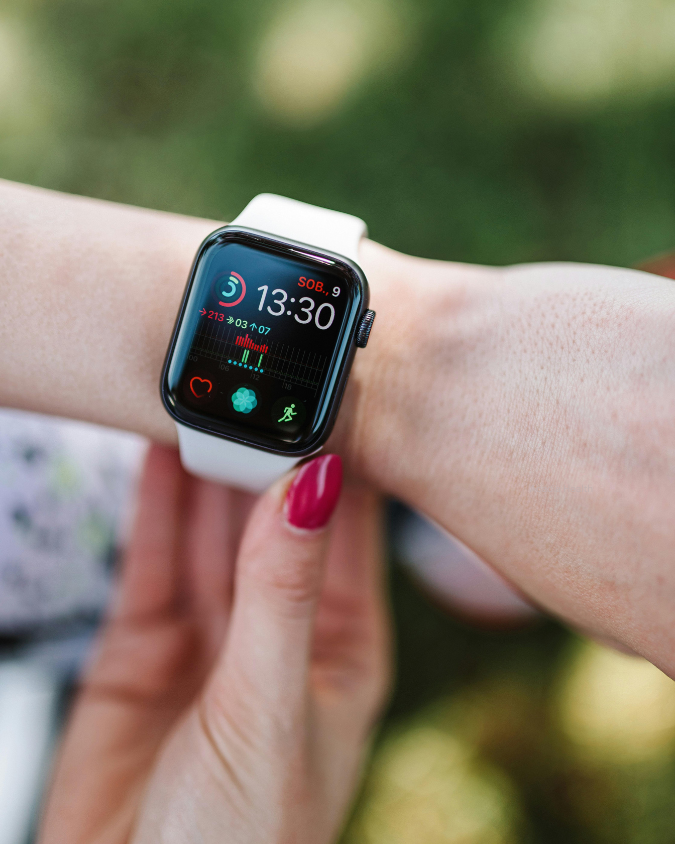
You slept. You actually slept. Seven, maybe eight hours. And yet you wake up tired — not the pleasant heavy tiredness of a good night, but the flat, grey kind that makes the morning feel like something to survive. By 10am your shoulders are already up around your ears. Your jaw is tight. Your watch is telling you your body battery is sitting at 42, your heart rate is hovering in the 90s, and your stress score has been in the red for the better part of two weeks.
Here’s the thing: your watch is telling you something real. When stress sticks around, it is hard on the body.
I’ve been practicing massage therapy for over 20 years, and what I see on my table every day has changed. Not the injuries — those are predictable enough. What’s changed is the background state people arrive in. More often than not, before I’ve touched anything, I can feel that the nervous system is running hot. The body is braced. Tissue that should be pliable is guarded. And when I ask how things have been, the answer is almost always some version of: fine, I think — just tired, just busy, just stressed.
Just.
What Your Watch Is Actually Measuring
Heart rate variability (HRV)
HRV has become one of the most popular metrics in consumer wearables, and also one of the most misunderstood. Garmin, Fitbit, and Apple all present it in slightly different ways, usually framed as a recovery score or readiness indicator. That framing isn’t wrong, but it doesn’t tell you much about why the number matters.
The underlying biology is: your heart doesn’t beat like a metronome. Even at rest, the time between beats varies slightly from one beat to the next. That variation is governed by your autonomic nervous system, specifically, the balance between its two branches. The sympathetic branch accelerates the heart and primes the body for action. The parasympathetic branch slows things down and facilitates recovery. When these two are in healthy dialogue, the heart responds fluidly to moment-to-moment demand, and the time between beats varies noticeably. That’s a high HRV.
When the sympathetic branch dominates, which is what happens under sustained stress, that variability drops.1 The system is less flexible, less responsive, running in a more defended state.
A single low HRV reading doesn’t mean much. Bodies have bad nights. But a chronically suppressed HRV over days and weeks is a meaningful signal that the nervous system hasn’t been finding its way back to baseline. ²
Resting heart rate (RHR)
RHR is a measure of sympathetic activity. When RHR trends upward over time, even without increased training load, this is a sign of stress.
Disrupted sleep
Watches can catch repeated heart rate spikes through the night. These spikes may indicate “micro wakes.” The fact you don’t feel rested, even after nine hours of shuteye, suggests it is not the duration of your sleep, but the quality of your sleep. Not to mention those 3am wakes, which can suggest an elevated level of the stress hormone cortisol. ³
Beyond The Data
In clinical practice, I notice a pattern in tissue I call armouring. It’s not a tight spot. It’s not a knot you can find and work on. It’s more diffuse than that — an entire area of the body that is on alert, guarded, holding. The shoulder that isn’t injured but won’t let go. The whole upper back that tightens the moment you touch it. It’s the tissue expression of a nervous system that has been on watch for a long time.
People often assume that if they’re not acutely stressed — no crisis, no emergency, nothing on fire — then the system should be fine. But chronic stress doesn’t require drama. It accumulates in the background: the relentless pace of work, the low-level hum of financial worry, the caregiving load, too many little balls in the air, the never-quite-empty inbox. The nervous system responds to all of it, and if it never gets the signal that the coast is clear, it stays activated.
What Accumulates
There’s a concept in stress physiology called allostatic load — the cumulative cost to the body of sustained adaptation to stress. ⁴ The stress response is brilliantly designed for short-term demands. Cortisol and adrenaline mobilise energy, sharpen focus, and suppress non-essential functions so you can deal with what’s in front of you. Then, when the threat passes, the system is supposed to return to baseline and recover.

The problem with modern, chronic stress is that the recovery phase is shortened or skipped entirely. The next demand arrives before the last one has resolved. Over time, the system adapts — but adaptation has a cost. Hormonal rhythms shift. Inflammation rises. Sleep architecture degrades. Tissue quality suffers. The body isn’t failing; it’s doing exactly what it was designed to do. But it’s doing it continuously, without adequate rest, and the bill accumulates.⁴
This is what a chronically low HRV, a persistently elevated resting heart rate, and years of poor sleep are measuring. Not weakness. Not failure. A system that has been working very hard for a long time without enough recovery built in.
Why This Matters
Understanding that these symptoms have a coherent physiological explanation is genuinely useful — not because naming a problem solves it, but because it reframes it. If you’ve been treating fatigue with more coffee, tension with occasional stretching, and poor sleep with medication, understanding the underlying mechanism opens up a different set of options.
Your data is trying to tell you something. It’s worth learning to read it.
Graham Robertson is a Registered Massage Therapist at Acacia Health with over 20 years of clinical experience. He works with patients across a range of musculoskeletal and chronic pain presentations. View Graham’s full bio here.
- Shaffer F, Ginsberg JP. An overview of heart rate variability metrics and norms. Front Public Health. 2017;5:258. https://doi.org/10.3389/fpubh.2017.00258
- Thayer JF, Åhs F, Fredrikson M, Sollers JJ, Wager TD. A meta-analysis of heart rate variability and neuroimaging studies: implications for heart rate variability as a marker of stress and health. Neurosci Biobehav Rev. 2012;36(2):747–756. https://doi.org/10.1016/j.neubiorev.2011.11.009
- Åkerstedt T. Psychosocial stress and impaired sleep. Scand J Work Environ Health. 2006;32(6):493–501. https://doi.org/10.5271/sjweh.1054
- McEwen BS. Stress, adaptation, and disease: allostasis and allostatic load. Ann N Y Acad Sci. 1998;840:33–44. https://doi.org/10.1111/j.1749-6632.1998.tb09546.x