
Headache & Migraine Care Victoria
Recurring headaches and migraines are common — but you don’t have to just live with them. They can be treated.
If headaches or migraines keep interrupting your life, you’re in the right place. At Acacia Health, we treat headaches as a problem to solve, not something to endure. Our team works across several disciplines to find what’s actually driving your pain — and to build a plan that reduces it.


Overview
There’s usually a reason your headaches keep coming back
And once we understand it, we can do something about it.
Recurring headaches are almost always driven by something — muscle tension, migraine biology, jaw mechanics, a sensitised nervous system, or a mix — and a single treatment often only ever addresses one of them. Our team works across massage, chiropractic, acupuncture, physiotherapy, and naturopathic medicine to find what’s actually driving your headaches.
If one thing hasn’t worked before, that usually means there’s more to try — not that nothing can be done.
Our Approach
We consider each client’s individual concerns and experiences and work to tailor treatments to your particular needs and therapeutic goals.


Do these sound like your headaches?
Headaches take many forms, sometimes you might be experiencing different ones, and it isn’t always obvious which kind you have — or what’s causing it. The descriptions below can help you recognise your pattern. You don’t need to diagnose yourself — if something here sounds familiar, that’s enough to start.

Tension-Type Headaches
These are the most common headaches — and the ones most often mistaken for migraines. The pain usually feels like pressure or a tightening band around the head, in the face, a dull ache at the temples or the back of the head, or a heaviness that builds through the day. For a lot of people it doesn’t start in the head at all: it begins as tightness in the neck, shoulders, or upper back and works its way up.
A few muscles are the usual sources. Tension in the muscles at the base of the skull (the suboccipitals), across the top of the shoulders (the upper trapezius), and along the side of the neck (the sternocleidomastoid) can all refer pain up into the head — which is why a headache can show up well away from the muscle actually causing it. That side-of-neck muscle can also leave you feeling dizzy, off-balance, or foggy, not just sore — a link our physiotherapist unpacks in how neck tension can cause head pain and dizziness. You might hear these headaches sometimes called cervicogenic headaches.
Because the driver is usually muscular and mechanical, these tend to respond well to hands-on care that releases the tension and addresses how the neck and upper back are moving.
Often helped by massage therapy and chiropractic care.
Not sure if this is you? That’s normal — call our care coordinator at 250-475-1522 (ext 1) and we’ll help you find the right starting point.

Migraine
Migraine is more than a bad headache — it’s a neurological condition, and it tends to follow a recognisable pattern. The pain is often (though not always) on one side, throbbing or pulsing, moderate to severe, and it usually gets worse with movement or activity. Many people also feel nauseated, become sensitive to light, sound, or smell, and some notice warning signs in the hour or so beforehand — visual changes, tingling, or an “aura.” Attacks can last anywhere from a few hours to several days, and often leave you drained afterward.
People reach for the word “migraine” to describe any severe headache, but true migraine has its own pattern — and its own approach to care. Because it’s driven by the nervous system rather than by muscle tension, the goal isn’t just to get through a single attack. It’s to reduce how often attacks happen, how severe they are, and to work out what’s setting them off — sleep, stress, hormones, food, screen time, or a mix.
Often helped by acupuncture, which has a genuine evidence base for migraine prevention, and naturopathic care to address triggers, inflammation, and hormonal or dietary patterns. Not sure? Our care coordinator can help — 250-475-1522 (ext 1).
TMJ-Related
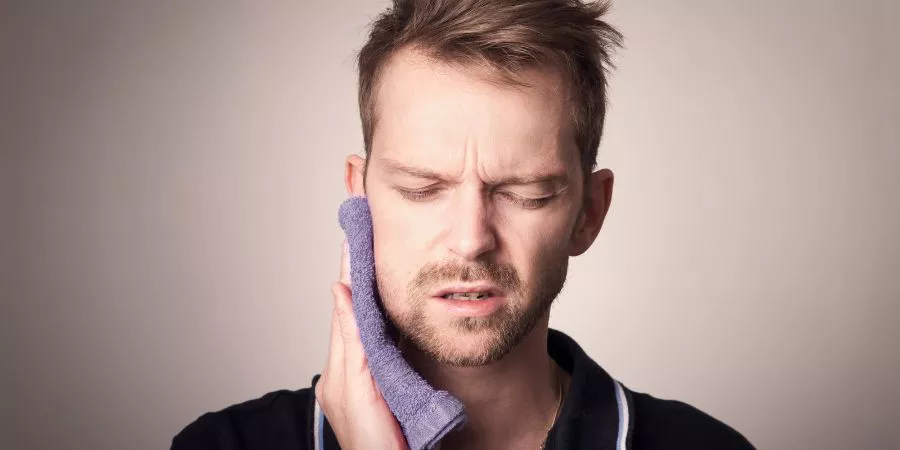
If your headaches come with jaw pain, clicking or popping, clenching, or grinding — or with an ache around the temples and in front of the ears — your jaw joint (the TMJ) may be part of the problem. This kind of headache often shows up in the morning after a night of clenching, or builds through a stressful day. Some people also notice their jaw tiring or aching while chewing, or tenderness in the muscles at the side of the face. Our chiropractor explains what drives TMJ headaches and how they’re treated in more detail.
What’s usually going on is that the muscles that move the jaw, and the joint itself, are not working efficiently, and that strain refers pain up into the head. Because the jaw and neck share so much of the same territory, TMJ-related headaches often overlap with tension and neck symptoms.
Often helped by chiropractic care (including shockwave therapy), massage therapy, and acupuncture — Christina Casciano has a particular focus on jaw and facial pain. Unsure where to begin? Call 250-475-1522 (ext 1).

Hypermobility & EDS
Headaches and migraines are reported at a higher frequency and an earlier age of onset in people with Ehlers-Danlos syndrome (EDS) and hypermobility spectrum disorders (HSD) compared to the general population (Mehta, 2024).
Some of the headache disorders in patients with EDS and HSD include postural orthostatic tachycardia syndrome (POTS), craniocervical instability, cervicogenic, and temporomandibular joint headaches.
Headaches don’t always fit neatly into one category, and many people have more than one type at once. Figuring it out is exactly what an assessment is for. If you’re unsure where to start, call our care coordinator at 250-475-1522 (ext 1) and we’ll point you in the right direction.
Reference:
Mehta D, Simmonds L, Hakim AJ and Matharu M (2024) Headache disorders in patients with Ehlers-Danlos syndromes and hypermobility spectrum disorders. Front. Neurol. 15:1460352. doi: 10.3389/fneur.2024.1460352
Learn More
Your first appointment is about understanding your headaches, not just treating the symptom. Your practitioner will take a detailed history — when your headaches happen, how long they last, where the pain sits, and what makes them better or worse — and, when relevant, assess your neck, jaw, posture, and movement. The goal is to find patterns and likely triggers, not just to offer temporary relief.
Come prepared — it helps us help you faster
Before your visit, pay attention to your headaches for a week or two. Even a rough sense of the following makes your first appointment far more productive:
- When your headaches happen (time of day, days of the week, how often)
- What you were doing beforehand (screen time, stress, poor sleep, skipped meals, work)
- Where the pain sits and what it feels like
- How long it lasts and what brings relief
Keeping a simple headache diary is one of the most useful things you can do — and it’s something every good assessment can benefit from.
How the disciplines differ
Each discipline looks at your headaches through a different lens.
- Massage therapy and chiropractic care address the muscular and mechanical triggers — neck and shoulder tension, jaw involvement, posture — including the way chronic stress keeps those muscles switched on.
- Physiotherapy looks at how your body moves and handles load — particularly important when hypermobility or a sensitised, easily-overloaded system is part of the picture.
- Acupuncture works with the nervous system and has a genuine evidence base for reducing migraine frequency
- Naturopathic medicine looks at triggers, inflammation, sleep, and hormonal or dietary patterns.
None of these is inherently “best” — the right one depends on what’s driving your headaches, which is exactly what we help you figure out.
Most headaches aren’t dangerous, and imaging usually isn’t needed. But some symptoms warrant prompt medical attention. See a doctor or seek emergency care if you experience:
- A sudden, severe headache that peaks within seconds (“the worst headache of your life”)
- A headache with fever, stiff neck, confusion, or a rash
- A headache after a head injury
- Headache with weakness, numbness, vision loss, difficulty speaking, or loss of balance
- A new or different headache pattern, especially after age 50
- Headaches spikes that wake you from sleep, or are brought on by coughing, exertion, or straining
- Headache with unexplained weight loss, or that steadily worsens
If in doubt, get it looked at — and if you don’t have a family doctor, a walk-in clinic or urgent care is a fine place to start. The care Acacia provides is for recurring, non-emergency headaches and migraines.
If you’re ready to do something about your headaches, book with the discipline that fits your pattern — or, if you’re not sure, let us help.
Book Massage Therapy · Book Chiropractic Care · Book Acupuncture · Book Physiotherapy . Book Naturopathy
Not sure where to start? Call our patient care coordinator at 250-475-1522 (ext 1) and we’ll match you with the right practitioner.
Our Beliefs
Our Practitioners
We take an empathetic approach to your care and always provide the most up-to-date information and resources. We want to help you on your journey to recovery.
Not sure where to start? Call 250-475-1522, ext 2. and our patient care coordinators will help.






FAQ
Still have more questions? Check out the tabs below. If your questions are still unanswered, please reach out, we love to help get to the root of things.
No. All of Acacia Health’s disciplines are direct-access in BC — you can book without a doctor’s referral. (Some extended health plans may ask for one to reimburse, so it’s worth checking your policy.)
It depends on what’s driving them — muscular tension, migraine, jaw involvement, or hypermobility. The headache types above can help you recognise your pattern, and if you’re not sure, our care coordinator will point you to the right starting place (250-475-1522, ext 1).
Our focus is on finding and addressing what’s driving your headaches — triggers, muscle tension, posture, neurological patterns — not just easing the pain for a day. For long-standing or complex cases we draw on more than one discipline.
Many extended health plans cover our various modalities — check your specific plan for the details. If your headaches followed a motor vehicle accident, treatment may be covered through ICBC.
Yes — and for prevention it’s one of the better-evidenced options we offer.
A Cochrane review of randomised trials found that adding acupuncture reduces how often migraines happen, and that it works at least as well as standard preventive medications, generally with fewer side effects [1]. Later trials back this up: a 2017 randomised trial in JAMA Internal Medicine found true acupuncture reduced migraine frequency more than sham treatment, with the benefit holding for months afterward [2], and a 2020 trial in the BMJ found a course of manual acupuncture cut monthly migraine days compared with both sham acupuncture and usual care [3]. It won’t suit everyone, and it works best as a planned course rather than a one-off — but for migraine prevention, the evidence is genuinely there.
Our registered acupuncturist Jennifer Midlane walks through the research in acupuncture for migraines is evidence based.
1. Linde K, Allais G, Brinkhaus B, et al. Acupuncture for the prevention of episodic migraine. Cochrane Database of Systematic Reviews. 2016;(6):CD001218.
2. Zhao L, Chen J, Li Y, et al. The long-term effect of acupuncture for migraine prophylaxis: a randomized clinical trial. JAMA Internal Medicine. 2017;177(4):508–515.
3. Xu S, Yu L, Luo X, et al. Manual acupuncture versus sham acupuncture and usual care for prophylaxis of episodic migraine without aura: multicentre, randomised clinical trial. BMJ. 2020;368:m697.
“Migraine” gets used for any severe headache, but it’s a specific neurological condition with its own pattern — typically one-sided, throbbing, worse with activity, and often with nausea or sensitivity to light and sound. Getting the distinction right matters, because it changes how it’s best treated.
Most headaches aren’t dangerous, but some need prompt care — a sudden “worst-ever” headache, one with fever or a stiff neck, one after a head injury, or one with numbness, weakness, or vision or speech changes. See the full list above.