As the new year approaches, many of us start thinking about resolutions and what we want to accomplish in 2026. Weight loss is a common resolution that pops up every year. However, following strict diets or trends can often do more harm than good. If you want to make healthy changes in 2026, here are three New Year’s resolutions that are not focused on weight loss.
1. Learn new recipes to cook from home
Cooking from home is great for your health, helps save money, and lets you develop new skills. By choosing to cook at home instead of ordering take-out, you have more control over what goes into your food (such as sodium, sugar, and saturated fat), and you can rely less on highly-processed foods. Therefore, learning new recipes can inspire healthier habits naturally, without the pressure of dieting.
Choose dishes that excite you, explore flavors from different cultures, or challenge yourself to try one new recipe every week. Try making a larger portion of the meals you cook, to have as leftovers for the next few days. If you do not enjoy eating the same meal multiple days in a row, try freezing extra portions to have later on. Check out some of the recipes on our blog if you need meal ideas!
2. Improve your fibre intake
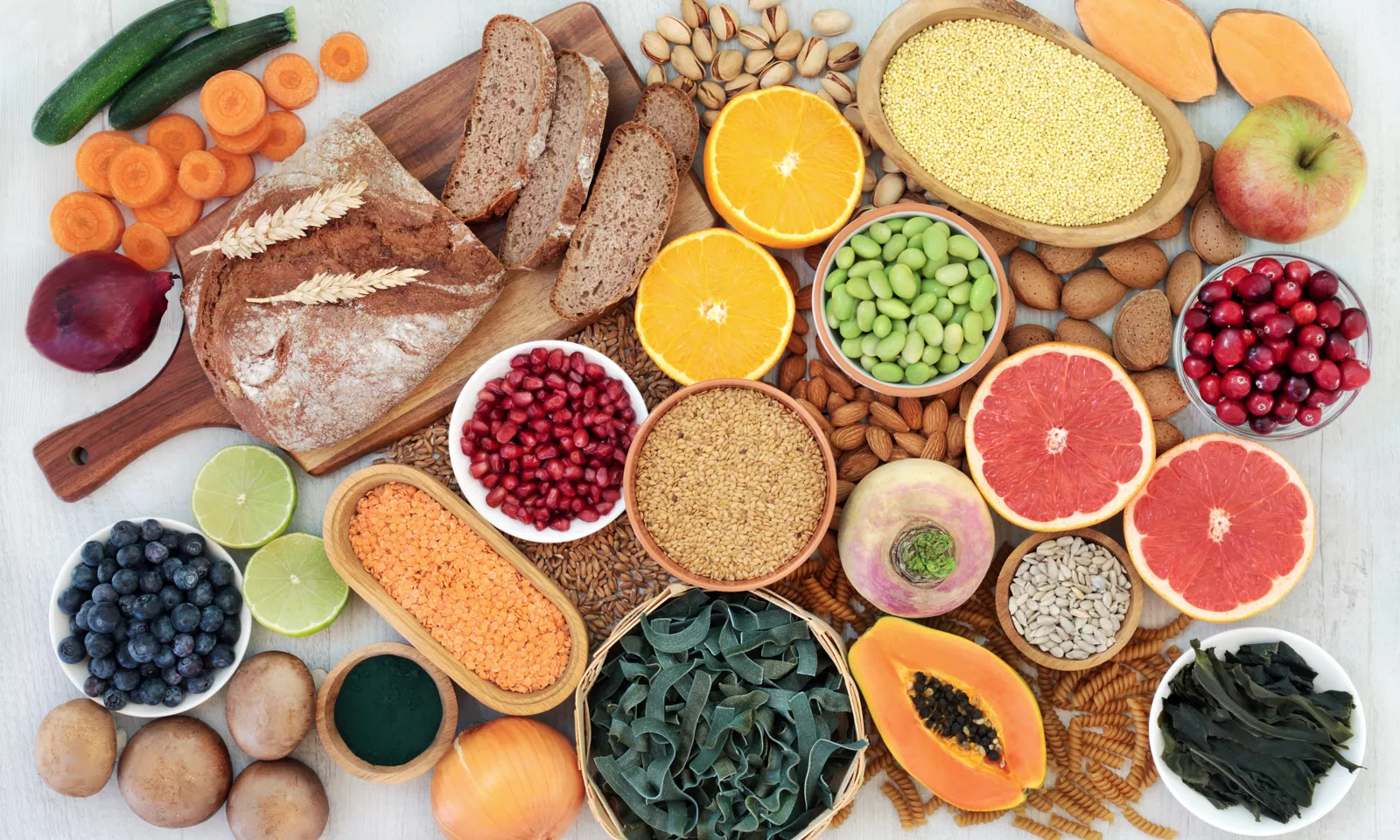
Did you know that only about half of Canadians are getting enough fibre? For ages 19-50, women need 25g of fibre every day, and men need 35g. Fibre is important for reducing risk of many diseases such as heart disease, diabetes, diverticular disease, and certain types of cancer. Instead of focusing on restricting foods, adding sources of fibre to your diet is one of the simplest ways to improve your diet and overall health. Some tips to improve fibre intake include:
- Choose whole grains more often (whole wheat, brown rice, etc.)
- Experiment with different grains, such as amaranth, millet, farro, or barley
- Add chia or flax seeds to smoothies, oatmeal, or over cereal
- Aim to make half your plate fruits and vegetables
Remember to add fibre gradually, and pair with enough fluid intake to avoid uncomfortable digestive symptoms, such as bloating.
3. Repair your relationship with food
If you feel like you are constantly thinking about food, experiencing cycles of restricting and over-eating, or viewing foods as ‘good’ or ‘bad,’ you may need to consider rebuilding your relationship with food. Remember that this can be a journey, and does not happen overnight. If you are unsure how to start, here are some steps:
- Focus on honouring your hunger and fullness cues. This can be easier said than done if you are used to restricting or ignoring hunger cues. Eat when you notice physical signs of hunger (such as a grumbling stomach), and do not wait until you feel dizzy, irritable, or weak. Stop eating when you are satisfied, but not uncomfortably full. Remember, your hunger and fullness cues may change day-to-day based on physical activity, so your portions may be different too!
- Remember that all foods can fit into a healthy diet. Restricting foods that bring you joy often just leads to over-eating and shame later on. Instead, focus on balancing meals with protein, fibre, and healthy fats, and honour cravings as they arise. You may find that you can move on throughout your day, without obsessing over food.
- Change how you label foods. Remember that foods are not inherently ‘good’ or ‘bad,’ and by labelling them as such, you are only damaging your relationship with food. Even if a food is less nutritious, it can still be important for bringing joy or connecting people with their culture. Try catching yourself when you label a food as ‘good’ or ‘bad,’ and instead try shifting to a more neutral approach.
By focusing on habits that are not weight-related, you can improve your health without the added stress from dieting.
I’m Erica Zeeman, registered dietitian at Acacia Health in Victoria, BC. You can read more about me on my bio, or about our Dietitian Services offered at Acacia.
- Harvard T.H. Chan School of Public Health. (n.d.). Fiber. The Nutrition Source. Retrieved December 22, 2025, from https://nutritionsource.hsph.harvard.edu/carbohydrates/fiber/
- Harvard T.H. Chan School of Public Health. (n.d.). Intuitive Eating. The Nutrition Source. Retrieved December 22, 2025, from https://nutritionsource.hsph.harvard.edu/intuitive-eating/
- Health Canada. (n.d.). Cook more often. Canada’s Food Guide — Healthy Eating Recommendations. Retrieved December 22, 2025, from https://food-guide.canada.ca/en/healthy-eating-recommendations/cook-more-often/
- Alberta Health Services. (2021). Hunger and fullness signals [PDF]. Nutrition Services. Retrieved December 22, 2025, from https://www.albertahealthservices.ca/assets/info/nutrition/if-nfs-hunger-and-fullness-signals.pdf Alberta Health Services