In more than two decades of naturopathic practice, some of the cases that have taught me the most weren’t always my patients at all — they sometimes were colleagues. This is one of them, and I think about it whenever a new parent tells me they feel like a shell of themselves in the weeks after giving birth.
A former colleague of mine, a naturopathic physician who practiced here at Acacia, delivered her first child a few years ago. In the days that followed, she felt completely off — light-headed, ungrounded, struggling with breastfeeding, unable to hold a simple thought. She did what most of us are trained to do: she attributed it to the hormonal swings we learn about in school. She raised it with her midwives, who reassured her that what she was feeling was normal. On paper, it was.
But after about two weeks of feeling like she couldn’t count to five or make herself breakfast, she pulled up her own discharge bloodwork from the hospital. She was severely anemic — just not anemic enough, by hospital thresholds, to have been offered an iron infusion or a transfusion before discharge (though she had been worked up for a possible transfusion during the birth itself). Her midwives, like many, routinely discharge people with those numbers on the reasonable assumption that iron can be rebuilt slowly through diet and supplementation.
Here’s the part clinicians don’t always say out loud: for someone who lost a meaningful amount of blood during delivery, “slowly” can mean months of feeling exactly the way she did.
Postpartum hemorrhage — generally defined as losing more than 500 mL of blood after a vaginal birth or more than 1,000 mL after a cesarean — affects up to roughly 1 in 20 births. Even blood loss that never crosses that threshold can leave someone depleted, especially if their iron was already low during pregnancy. And the symptoms of postpartum iron deficiency overlap almost perfectly with what we’re told to expect anyway: exhaustion, low mood, poor concentration, emotional instability, a harder time establishing lactation, and a higher risk of postpartum depression. It is remarkably easy to miss.
The evidence for treating it more actively is stronger than our habits suggest. In Australia, IV iron is prescribed in pregnancy (around 96% of surveyed practitioners) and postpartum (around 85%), most often in a hospital setting. In Canada, a 2020 clinical review concluded that IV iron should be considered postpartum in appropriate cases — in their words, in select clinical situations following a full clinical and laboratory assessment. It is not for everyone, and it isn’t a first move for mild deficiency. But it is a real option that too few people are told about.
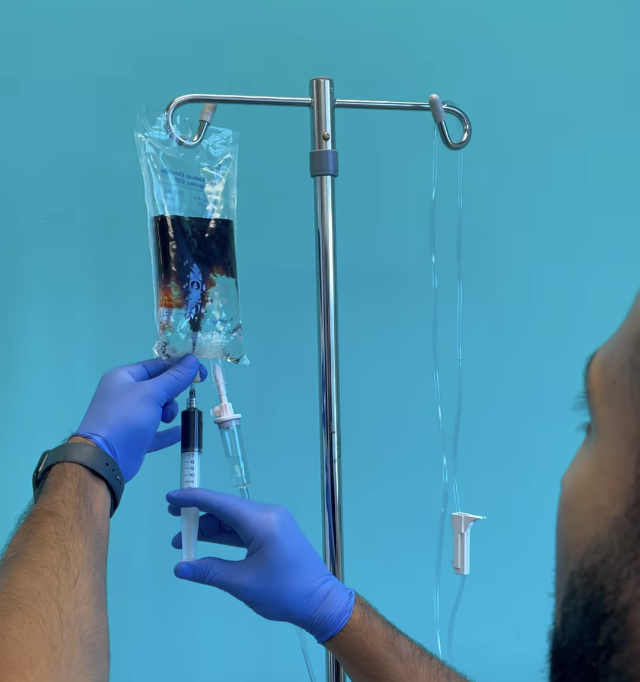
My colleague was one of the fortunate ones, mostly because she happened to know it existed. She came to Dr. Anita Komonski and me for a series of three iron infusions. A few days after the first, she told me it felt like her feet were finally back on the ground. By the third, she was herself again. What has stayed with me since is a simple question: how many people go through that fog for months, are told it’s normal, and never learn there was anything to be done?
If you’re wondering whether low iron might be behind how you’re feeling — during pregnancy or after — you can book a Virtual Iron Infusion Initial Consultation. In this 30-minute appointment we review your lab work, your symptoms, and your personal risk assessment for the procedure. Dr. Anita Komonski and I currently offer these consultations at Acacia Health.
Wherever you’re receiving care, I hope this gives you a little more footing to advocate for yourself.
Dr. Pamela Hutchison, ND, is the founder of Acacia Health and has practiced naturopathic medicine in Victoria since 2001, with a focus on neurological health, mental health, and complex chronic conditions. Book with Dr. Hutchison.